
Diaphragm Material Selection Guide
Diaphragm Material Selection Guide
Choosing the right diaphragm material is the single most important decision in a diaphragm design. The elastomer or polymer you specify determines chemical compatibility, flex life, temperature tolerance and how the finished part behaves under pressure. This guide compares the common diaphragm materials Exactseal works with and explains how each is typically chosen – then how we build a custom diaphragm to your drawing in the material your application requires.
Exactseal is a custom manufacturer. We do not sell raw sheet stock; instead, every diaphragm is molded or fabricated to your specification in the material best suited to your service conditions. If you are unsure which material fits, our team can help you narrow it down from your operating requirements.
Common Diaphragm Materials Compared
Each material carries its own balance of chemical resistance, flexibility and durability. The right choice depends on the media, temperature and cycle life your part will see.
- EPDM – A frequent choice for water, steam, dilute acids and outdoor or ozone exposure. Often selected where the media is water-based rather than petroleum-based.
- Nitrile (NBR) – Well suited to oils, fuels and hydraulic fluids, making it a common pick for automotive and fuel-handling diaphragms.
- Viton / FKM – Chosen for aggressive chemicals and elevated-temperature service where standard elastomers fall short.
- Silicone – Valued for a wide operating-temperature range and clean, inert characteristics; USP Class VI grades are available for pharmaceutical, food and medical applications.
- Neoprene (CR) – A balanced general-purpose material with good weather, ozone and moderate chemical resistance.
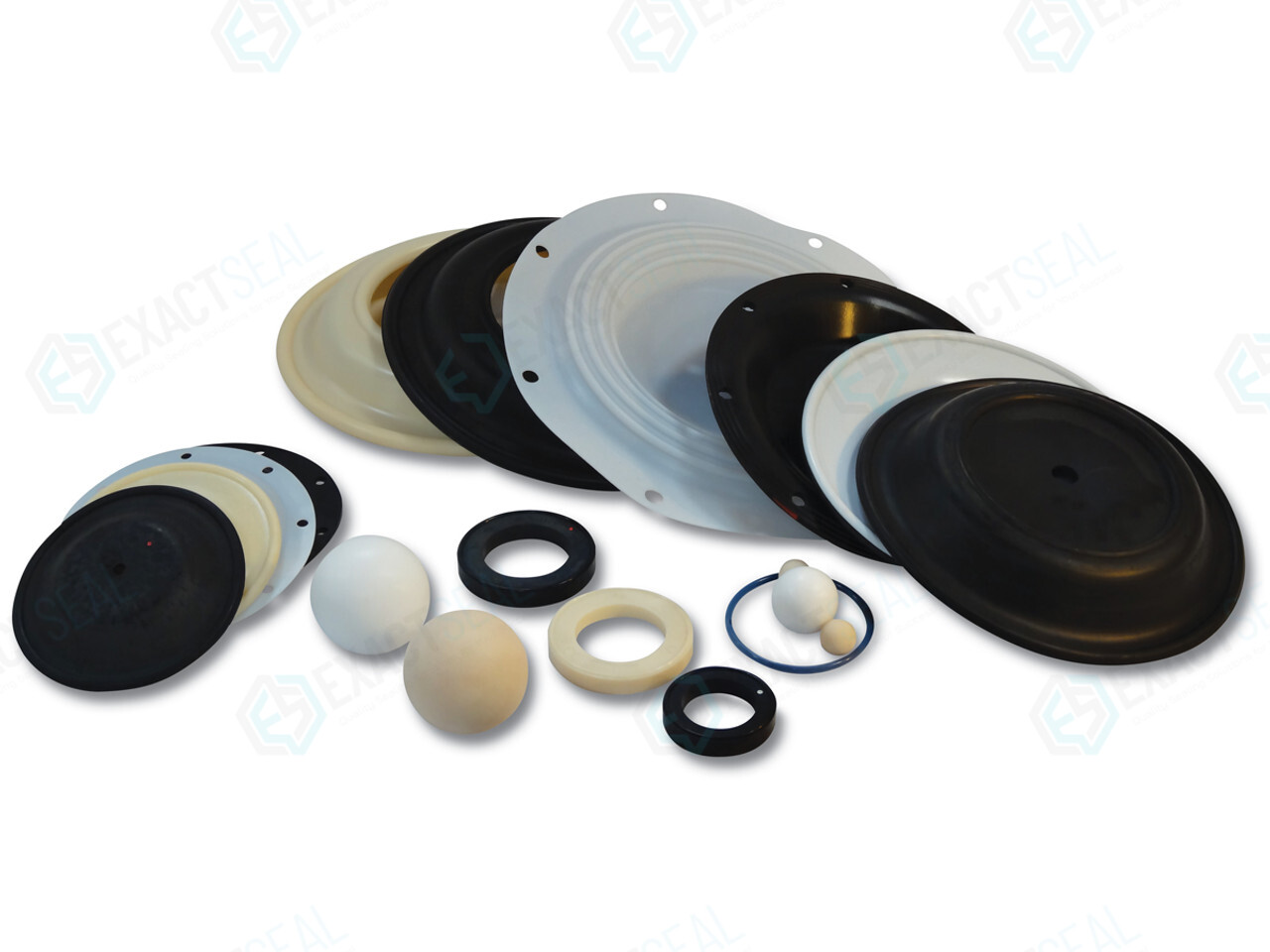
- PTFE – Specified when broad chemical inertness is essential, often used as a facing or barrier layer in sanitary, pharmaceutical and chemical-processing service. See our dedicated PTFE diaphragms page.
Matching Material to Application
Beyond the base material, diaphragm performance depends on hardness and construction. Exactseal produces diaphragms across a typical durometer range of roughly Shore A 40-50 for softer, high-flex parts up to Shore A 65-80 for firmer, higher-pressure designs. Where a part must transmit force under pressure without over-stretching, a fabric-reinforced diaphragm adds a supporting layer – nylon, Dacron, Nomex or Kevlar – between elastomer faces.
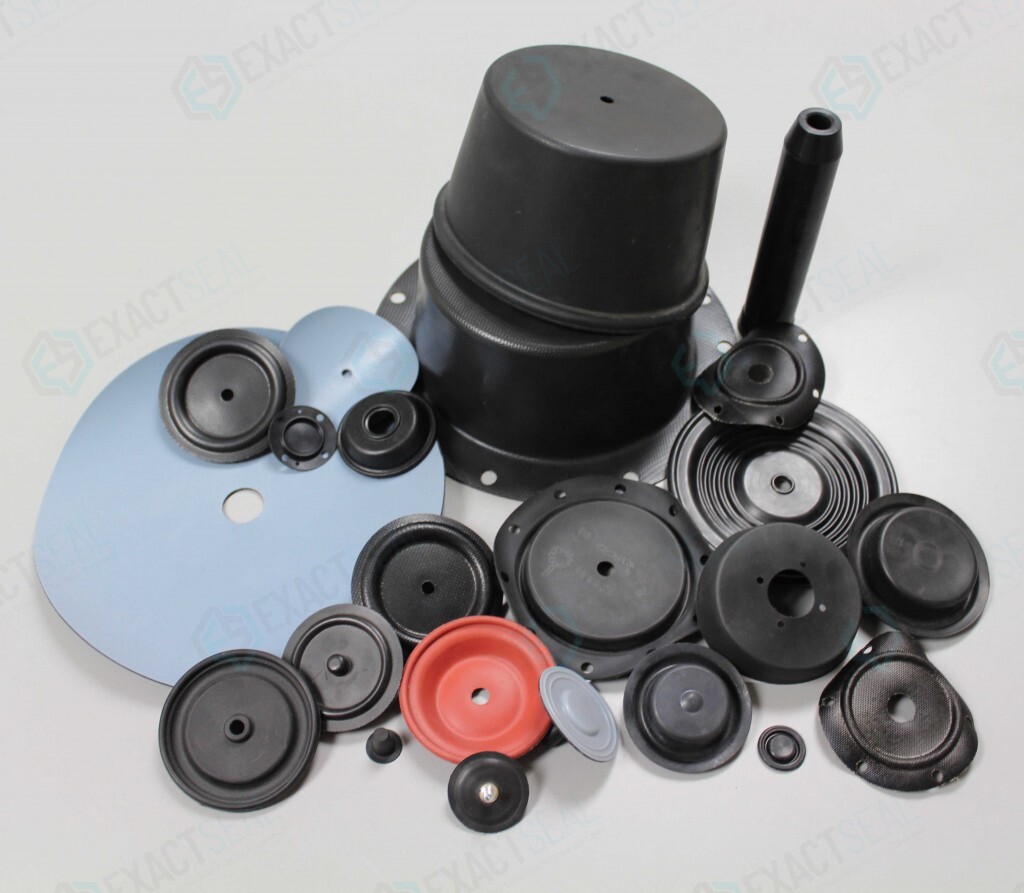
Typical diaphragm applications we build for include pumps, valves, actuators, regulators, vacuum pumps and instrumentation, spanning industries from pharmaceutical and food processing to aerospace and general industrial equipment.
Frequently Asked Questions
Do you sell diaphragm sheet material by itself?
No. Exactseal is a custom manufacturer of finished diaphragms. We use these materials to build parts molded or cut to your drawing, rather than supplying raw sheet stock.
How do I know which diaphragm material is right for my application?
Share your media, operating temperature, pressure and cycle-life expectations. We will recommend a material and construction that fit those conditions and quote a custom part accordingly.
Can you combine materials in one diaphragm?
Yes. Many designs pair an elastomer body with a fabric reinforcement or a PTFE facing to balance flexibility with chemical resistance and strength.
Request a Quote on Custom Diaphragms
Tell us your application and we will help you select the right diaphragm material and build the part to spec. Explore the full custom rubber diaphragm range, then request a quote with your drawing or requirements to get started.